At Moonz Dental Clinics, we focus on the dental health of the youngest members of the family. That’s why we place great importance on Paediatric Dentistry, the branch of dentistry dedicated to oral care from birth through adolescence.
Preventive and early treatment of oral issues are essential for avoiding complications that it’s a risk oral health and for promoting good dental hygiene habits in children. In these early years, collaboration between the paediatric dentist and the parents is key.
Paediatric Dentistry is the branch of dentistry responsible for preventing, diagnosing, and treating oral diseases that affect children from birth to adolescence. It is particularly focused on issues that frequently arise during childhood, like decay and dental trauma.
Additionally, paediatric dentistry guides and monitors children’s dental development to detect and treat problems that would be much more complex to resolve in adulthood.
At Moonz Dental Clinics, the most frequently performed paediatric dentistry treatments are as follows:
A filling is the primary treatment to combat cavities, as it allows for the repair of damage caused by cavities. It involves cleaning the affected area of the tooth and filling it with a material (usually composite) that restores its shape and function. Cavities are the most common dental disease in children and can appear as early as six months of age, when the first milk teeth come through.
Fluoride treatment is a preventive procedure that helps strengthen dental enamel and reduce the risk of cavities. During this treatment, the paediatric dentist applies a fluoride gel to the child’s teeth, which acts as a protective barrier against bacteria and acids from food.
Fissure sealing is also a preventive treatment against cavities. It involves applying a special material to the tiny grooves and fissures in children’s teeth, creating a protective barrier that prevents bacteria and food particles from accumulating in these hard-to-clean areas. This technique is typically used on molars, which are the teeth most prone to decay.
A pulpotomy is a procedure similar to a root canal treatment, but performed on primary (baby) teeth. It is used when decay has affected the tooth’s pulp, the internal area that contains nerves and blood vessels. This treatment removes part of the pulp when it is damaged by a severe infection, which can occur due to deep decay or trauma. A pulpotomy allows the tooth to remain in place until it naturally falls out, avoiding issues with dental alignment.
Space maintainers are small devices placed in children who have lost a baby tooth prematurely. Once in place, this device prevents the neighbouring teeth from shifting, preserving the space necessary for the permanent tooth to erupt correctly and preventing future alignment issues.
A filling is the primary treatment to combat cavities, as it allows for the repair of damage caused by cavities. It involves cleaning the affected area of the tooth and filling it with a material (usually composite) that restores its shape and function. Cavities are the most common dental disease in children and can appear as early as six months of age, when the first milk teeth come through.
Fluoride treatment is a preventive procedure that helps strengthen dental enamel and reduce the risk of cavities. During this treatment, the paediatric dentist applies a fluoride gel to the child’s teeth, which acts as a protective barrier against bacteria and acids from food.
Fissure sealing is also a preventive treatment against cavities. It involves applying a special material to the tiny grooves and fissures in children’s teeth, creating a protective barrier that prevents bacteria and food particles from accumulating in these hard-to-clean areas. This technique is typically used on molars, which are the teeth most prone to decay.
A pulpotomy is a procedure similar to a root canal treatment, but performed on primary (baby) teeth. It is used when decay has affected the tooth’s pulp, the internal area that contains nerves and blood vessels. This treatment removes part of the pulp when it is damaged by a severe infection, which can occur due to deep decay or trauma. A pulpotomy allows the tooth to remain in place until it naturally falls out, avoiding issues with dental alignment.
Space maintainers are small devices placed in children who have lost a baby tooth prematurely. Once in place, this device prevents the neighbouring teeth from shifting, preserving the space necessary for the permanent tooth to erupt correctly and preventing future alignment issues.
Professionals dedicated to orthodontics for over 15 years.
Caring for teeth throughout childhood offers numerous short- and long-term benefits:
At Moonz Dental Clinics, we plan paediatric treatments in stages to accommodate the child’s pace, age, and dental development.
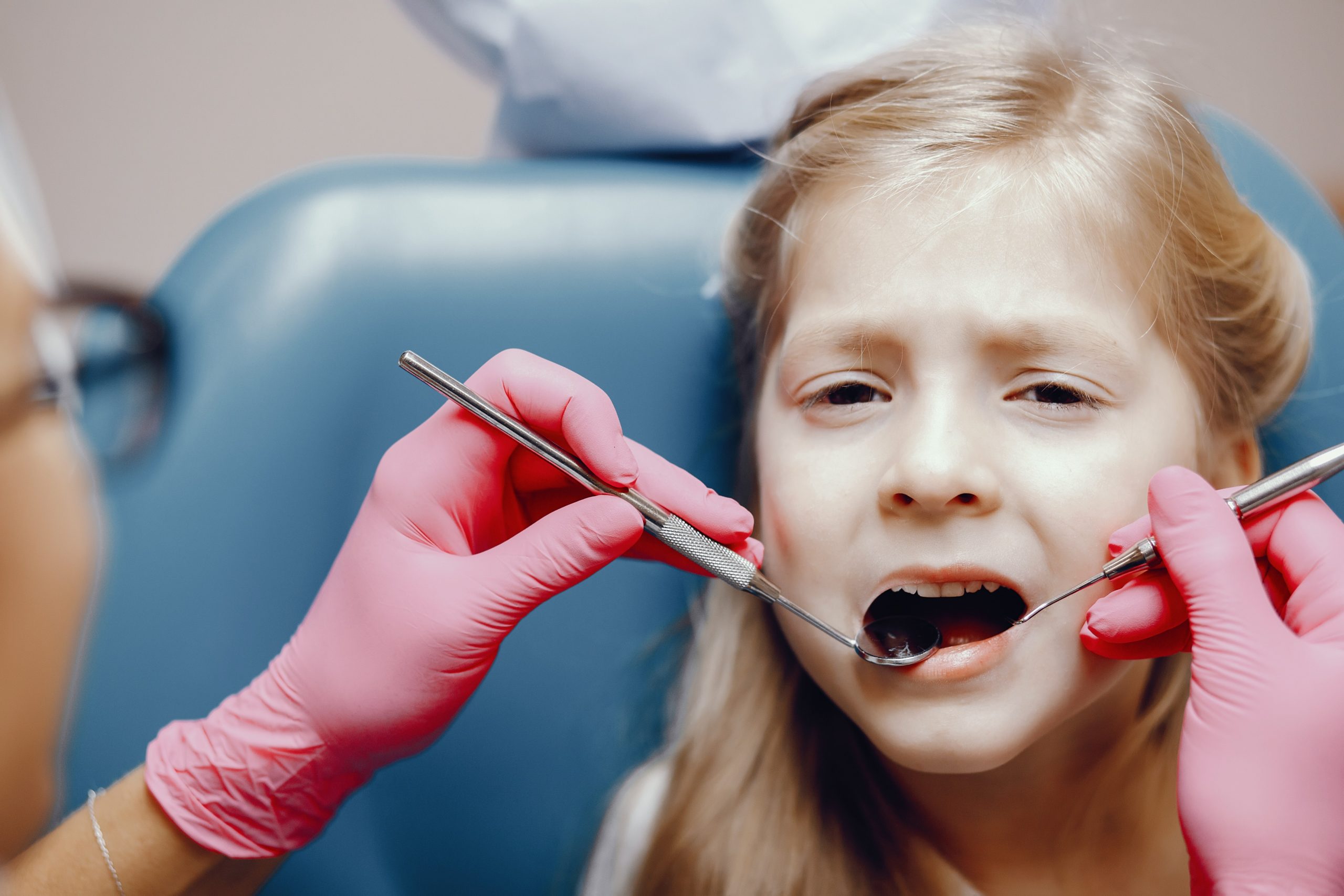
During the first visit, the paediatric dentist evaluates the child’s oral health through an examination and X-rays. Based on the child’s needs, they determine whether treatment is needed or if periodic check-ups are sufficient for monitoring growth.
If treatment is required, it is planned in phases over a specific period.
Treatments are performed progressively to ensure the child feels comfortable at every stage. This approach, which we follow at Moonz Dental Clinics, prioritises the child’s well-being and experience, reducing the risk of developing dental anxiety.
Treatments are complemented by a schedule of check-ups to maintain stable results, monitor treatment progress, and detect potential issues.
Paediatric dentistry covers children’s dental development from birth or the eruption of the first milk tooth up to adolescence, around age 14. During these years, paediatric dentists oversee the development of both primary and permanent teeth.
A paediatric dentist is a dentist focused on children’s dental care. Their work ranges from preventing and treating cavities to managing developmental dental issues and teaching good hygiene habits. Paediatric dentists are also trained to address psychological aspects, helping to normalise clinic visits and ease any dental fears.
Much of a paediatric dentist’s daily work involves planning and carrying out dental treatments (such as fillings, fluoride treatments, and pulpotomies) as well as performing check-ups and diagnostic tests.
Additionally, paediatric dentists play an essential educational role for both children and their parents. For example, they advise on common habits that, while seemingly harmless, can be damaging to teeth (such as excessive pacifier use, prolonged thumb sucking, high sugar consumption, and inadequate brushing frequency).

The main difference lies in the type of patients they treat. Paediatric dentists focus on children’s oral health and generally have additional training in techniques and treatments specific to children. On the other hand, a general dentist, while able to treat patients of all ages, is not specialised in children’s care.
The first visit to a paediatric dentist is recommended at one year of age or when the first milk tooth appears. This visit allows for early problem detection and gives parents guidance on initial care for baby teeth.
Esta recomendación se debe a que la caries, la enfermedad bucodental más frecuente en niños, puede aparecer en cuanto erupcionan los primeros dientes de leche, lo cual suele ocurrir alrededor de los seis meses.
There is a type of decay known as baby bottle tooth decay, which can affect babies’ first teeth even if they only consume milk. A timely visit to the paediatric dentist can rule out cavities or, if they are present, allow for early treatment, which is simpler and far less bothersome for the child.
This may vary depending on the dental clinic. At Moonz, our paediatric dentists are trained to create a trusting atmosphere and provide a warm, familiar approach. Techniques such as play and positive reinforcement are used according to each child’s needs.
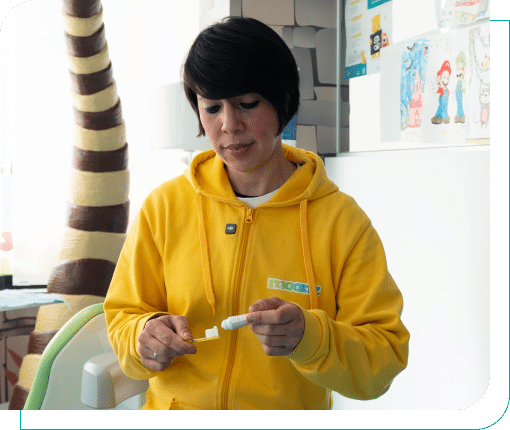
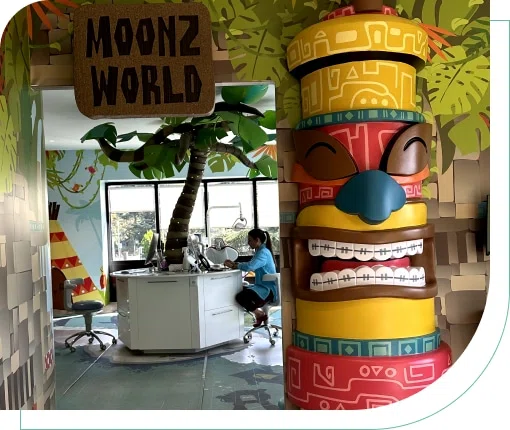
Furthermore, Moonz’s child-friendly clinics are decorated in a fun way and designed so that, from the moment they enter, children feel that a dental visit will be an adventure. These details build a trusting relationship with children and promote a positive attitude toward dental health.
If you would like to learn more about your child’s experience at our children’s dental clinics, we invite you to book a free initial consultation.
Dr. Carmen León Rubio holds a degree in Dentistry from the Complutense University of Madrid and has completed two master’s degrees in Pediatric Dentistry and Dental Sciences at the same university. In addition, since 2002 she has been a professor of Pediatric Dentistry at Alfonso X El Sabio University in Madrid.