Interceptive orthodontics

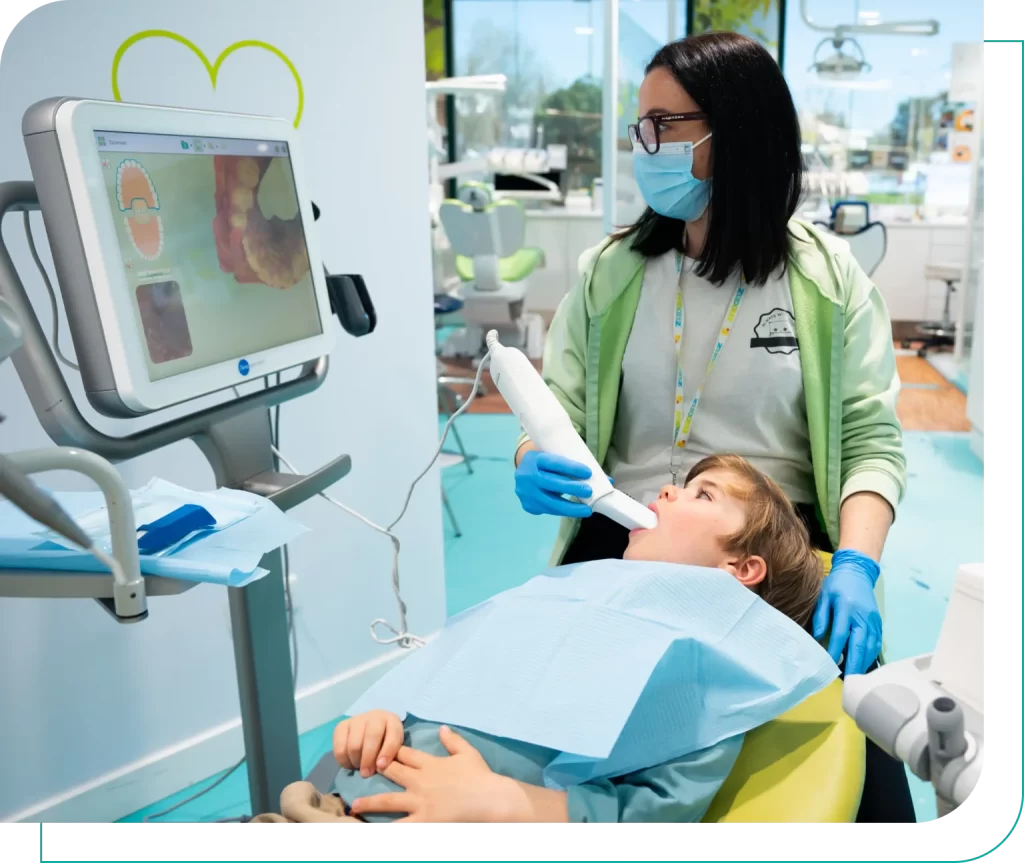
Children as well as adults are increasingly seeking orthodontic care, with braces or clear aligners. However, there are a great number of interceptive orthodontic and orthopaedic treatments available to correct dental malocclusions and an early age and prevent having to face more serious problems in the future. Like always, before determining if an interceptive orthodontic treatment is required, it is important to have children seen by an orthodontist for the first time at age six in order to detect any problems early and decide whether or not it needs to be treated.

What is orthopaedics?

Interceptive orthodontics is a type of preventive orthodontic treatment whose main objective is to guide and correct the development of the jawbones (the upper jaw and the lower jaw).
This treatment is used in children from the age of six, as the bone structures are still growing and therefore more adaptable. It is also the stage when the first permanent molars begin to erupt.

Why are interceptive orthodontic and orthopaedic treatments so important?

Interceptive orthodontics allows the development of the jawbones to be treated at the right time, in terms of both size and position, helping to prevent future problems. Some of the most common issues it can correct include:
• An upper or lower jaw that is too far forward or too far back. This leads to what are known as Class II (protruding upper jaw) or Class III (protruding lower jaw) malocclusions.
• A compressed upper or lower jaw, with abnormal development, either excessive or insufficient. For example, this can result in a high-arched or narrow palate, often associated with crossbites.
Lack of space for all permanent teeth, helping to prevent dental crowding.

Do you want to learn about Moonz?

Professionals dedicated to orthodontics for over 15 years.

Types of interceptive orthodontics

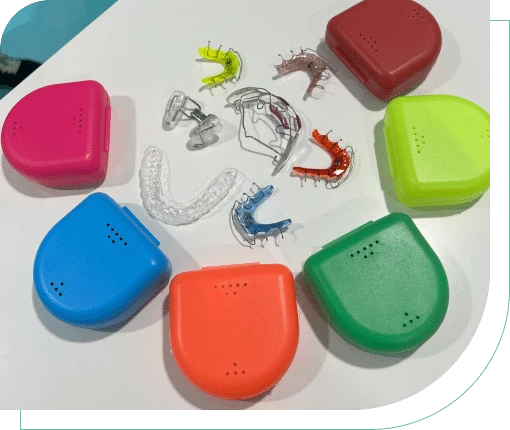
Depending on each child’s specific needs, one type of treatment or another may be recommended. We can distinguish between fixed and removable appliances.

  • Palatal expander (dental expander): a device fitted to the palate that helps widen the upper jaw. It is commonly used in children with a narrow or high-arched palate, or with a crossbite. The most common types include the Quad Helix, Hyrax expander and McNamara appliance.
  • Mandibular advancement devices (MAD): orthopaedic appliances used to treat jaw-related issues such as mandibular retrognathia or Class II malocclusion, where the aim is to encourage forward growth of the lower jaw.
  • Extraoral anchorage (headgear): a facebow attached to the back of the head or neck, used to slow down or guide the development of the upper jaw.
  • Face mask: an orthodontic device used to correct issues related to the development of the upper jaw and lower jaw.
  • Bionator: an orthodontic appliance used to correct malocclusions related to the size or position of the lower jaw, such as overbite or Class II malocclusion in the sagittal plane.
  • Removable plate: used to expand the dental arch and help prevent certain childhood habits that may affect palate development, such as thumb sucking. It can be combined with a grid if needed.
  • Chin cup: an elastic device that fits around the head and chin, used to control the growth of the lower jaw.

What are the benefits of interceptive orthodontics?

The main benefits of interceptive orthodontics include:
• Improves the bite and chewing function
• Promotes proper growth and development of the jawbones
• Helps avoid surgical procedures in adulthood (orthognathic surgery)
• Enhances facial aesthetics and oral health
• Reduces the risk of periodontal diseases such as gingivitis

Frequently asked questions

The duration of interceptive orthodontic treatment can vary depending on the severity of the issue and the child’s age.
However, it typically lasts between 6 and 18 months, provided the orthodontist’s instructions are followed and the appliance is worn for the recommended number of hours.

Dentists usually recommend starting interceptive orthodontic treatment from the age of 6, when the permanent teeth have not yet fully erupted. However, it can also be applied up to the age of 9, during the mixed dentition phase — when both baby and permanent teeth are present.

In most cases, interceptive orthodontic treatment is followed by an additional orthodontic phase, often to align and level the teeth for functional or aesthetic reasons, using either clear aligners or braces.
This is because interceptive orthodontics focuses on the bones. If not carried out at the right time, correcting skeletal or spacing issues later can be much more complex.
In contrast, treatment with aligners or braces acts on the teeth rather than the underlying bone structure. On their own, they may not fully resolve certain malocclusions and could lead to the need for extractions, surgical procedures, or even orthognathic surgery.


What is the difference between interceptive orthodontics, orthopaedics and corrective orthodontics?
It is quite common to confuse interceptive orthodontics, orthopaedics and corrective orthodontics, but they are different and complementary treatments.
Orthopaedics or interceptive orthodontics act on the development of the jawbones while they are still growing, typically between the ages of 6 and 9.
Corrective orthodontics, using braces or clear aligners, is carried out after this phase and focuses directly on the teeth, correcting their position and alignment.
In summary, combining these treatments helps achieve a functional and aesthetic smile with optimal bite alignment.

Content reviewed by our Moonz team

License Nº 28008151

Dr. Elena Lisa holds a degree in Dentistry from the European University of Madrid and is a specialist in Orthodontics and Dentofacial Orthopedics at the San Rafael Hospital in Madrid. Since 2010, she has been working exclusively as an orthodontist and has extensive training in the most in-demand orthodontic systems today: invisible aligners (Invisalign and Spark), lingual orthodontics (Incognito), and self-ligating brackets (Damon).

★★★★★★★★★★4.92/5
+5,506 reviews

Find a Moonz centre near you

Your location
Déjanos tus datos y te llamamos