Does your child breathe through their mouth, have crowded teeth, or are you concerned about how their jaw is developing? Children’s orthodontics can correct problems affecting the teeth and jawbones while your child is still growing, when treatment is generally simpler and outcomes tend to be better.
Below, we explain when your child should first visit an orthodontist, the different types of treatment available, and the signs that may indicate they need orthodontic care, so you can make an informed decision.
Children’s orthodontics is the area of dentistry that focuses on correcting the position of the teeth and guiding the growth of the jawbones (the upper and lower jaws) during childhood.
Unlike adult orthodontics, which mainly focuses on moving teeth that have already erupted, children’s orthodontics takes advantage of the fact that the jawbones are still developing, making many problems easier to correct.
This makes children’s orthodontics a very useful way to treat a malocclusion (an improper relationship between the teeth or between the jaws) at an early stage and prevent problems that could require more complex treatment later on.
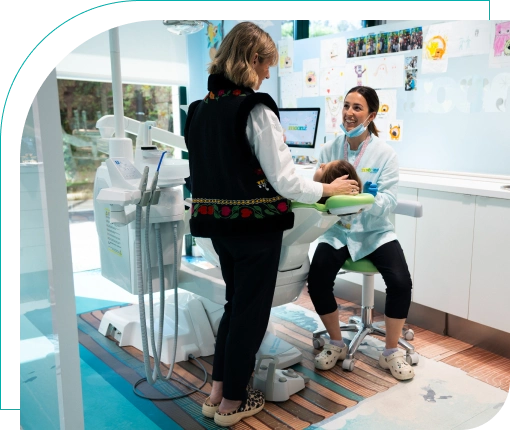
A first visit to the orthodontist is recommended at around the age of six. By this age, the first permanent molars have usually erupted, making it possible to assess the bite and identify potential problems with jaw development while growth can still be guided effectively.
This is the age recommended by leading orthodontic associations, such as the Spanish Society of Orthodontics (SEDO). Although every child develops at their own pace, the following age guide can help you understand what typically happens at each stage:
It is important to remember that you do not need to wait until all the permanent teeth have come through before taking your child to the orthodontist for the first time. Most problems are easier to correct while the jawbones are still growing.
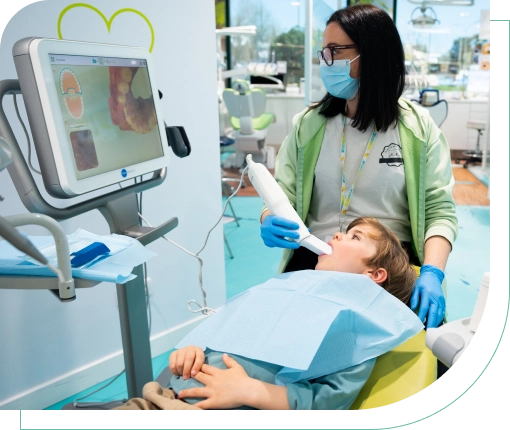
During childhood, the jawbones are still growing and are much easier to guide. This means, for example, that a narrow palate can be widened without surgery, something that is not possible in adults once the palatal bones have fully fused.
Once growth is complete, at around the age of 16 to 18, more significant jawbone problems can generally only be corrected by combining orthodontic treatment with surgery. This is why treatment during childhood often involves shorter, less invasive procedures and can help avoid more extensive interventions in the future.
Professionals dedicated to orthodontics for over 15 years.
Children’s orthodontic treatments are tailored to the child’s age and the type of problem that needs to be corrected. In general, they can be divided into three types, depending on the stage of growth at which treatment takes place.
Preventive orthodontics is used in younger children, between the ages of four and six. Its aim is to prevent problems from developing. This may involve correcting habits such as thumb sucking or prolonged pacifier use, as well as using space maintainers if a baby tooth is lost too early, helping to preserve enough space for the permanent teeth to come through.
Interceptive orthodontics is carried out between the ages of six and 11, while baby teeth are being replaced by permanent teeth. It acts on the growing jawbones to guide and correct their development before aligning the teeth. Appliances commonly used at this stage include:
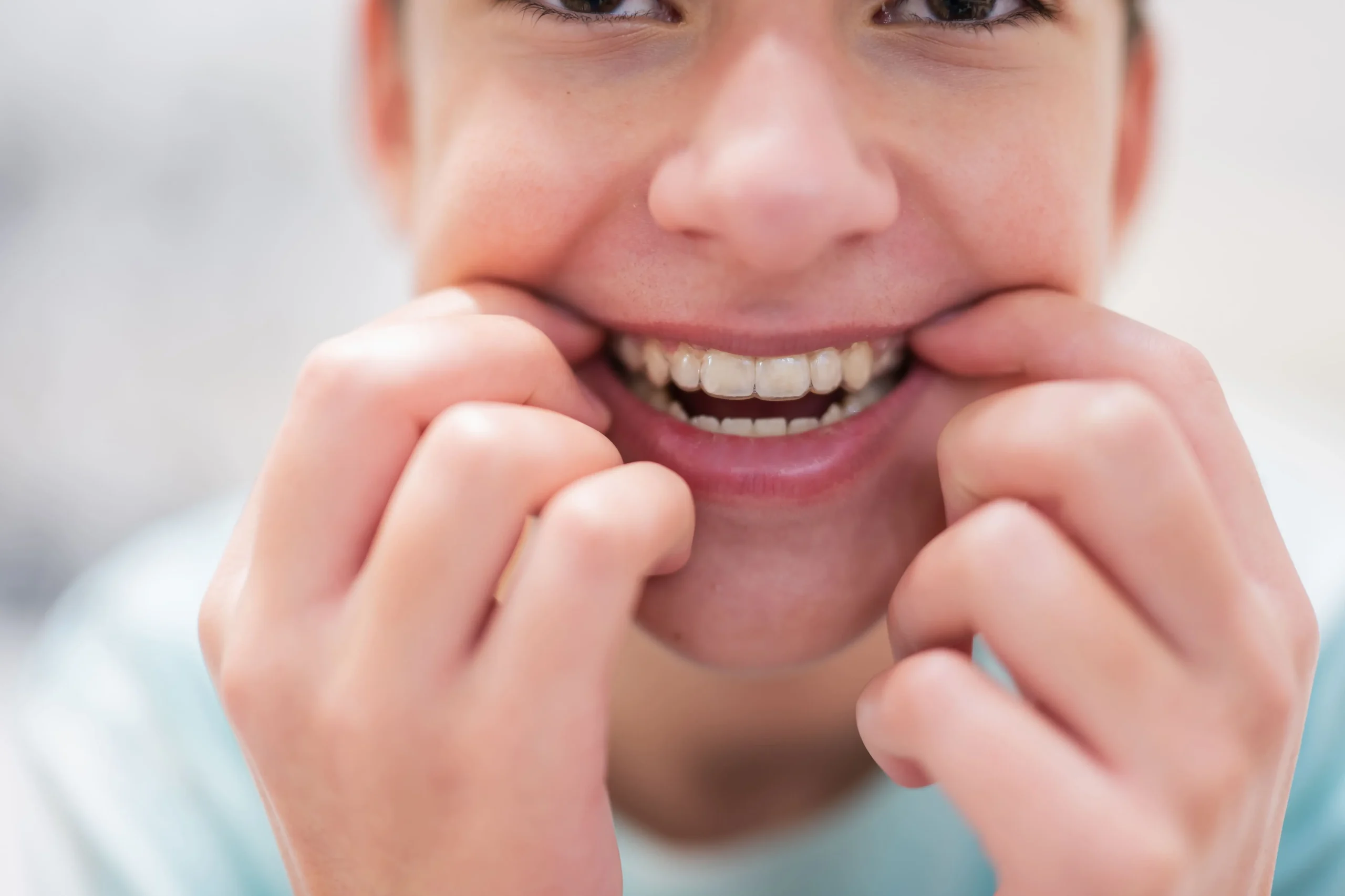
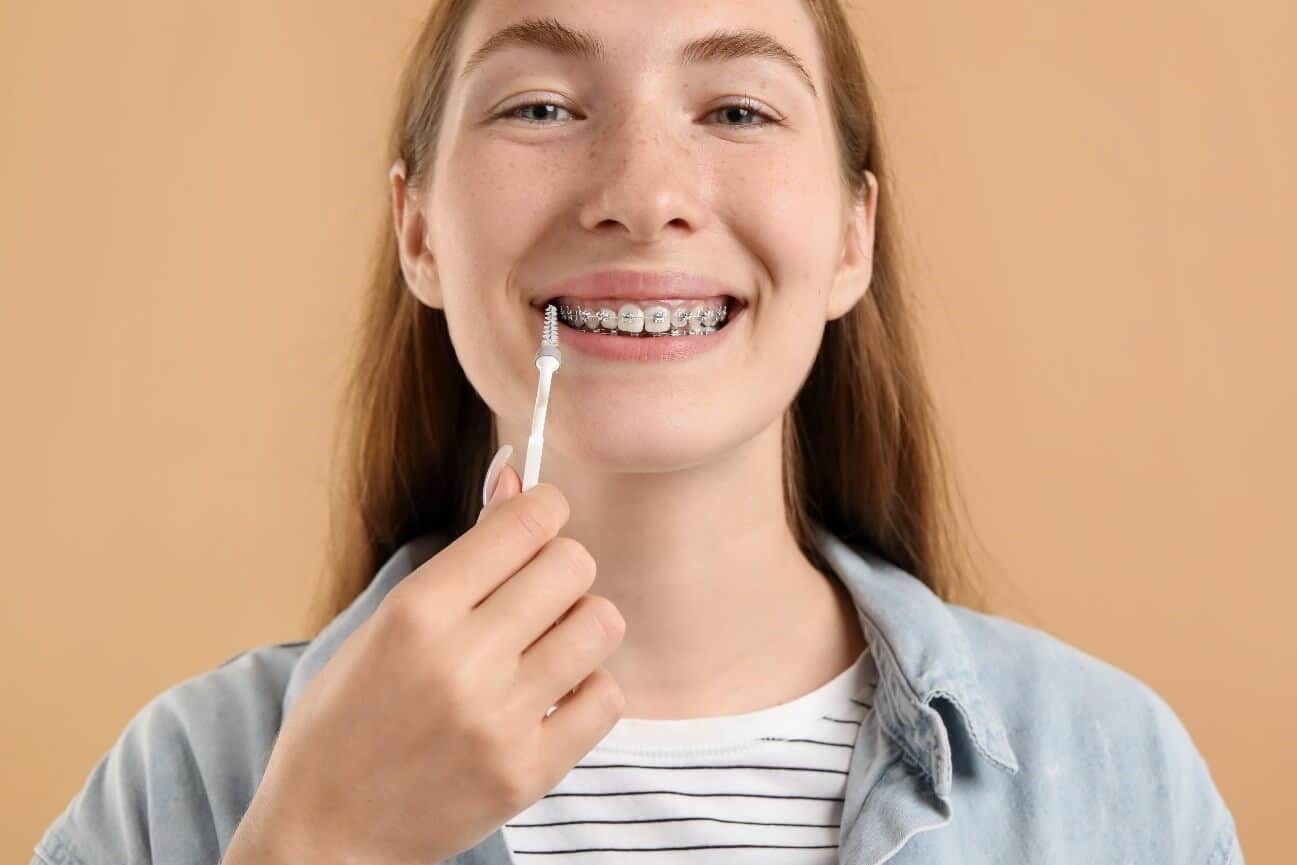
Corrective orthodontic treatment usually begins at around the age of 11 or 12, once the permanent teeth have erupted, and focuses on aligning the teeth and correcting the bite. The most common options are braces and clear aligners.
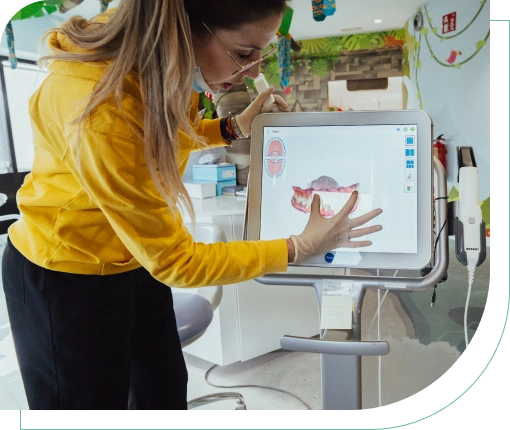
Only an examination by an orthodontist can confirm whether your child needs treatment, but there are certain signs worth looking out for. Pay attention if your child:
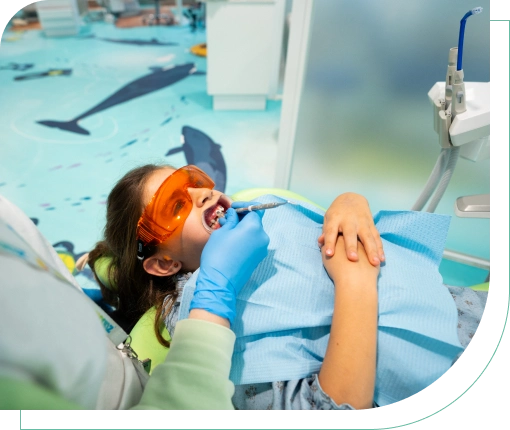
Many of the reasons why a child may need orthodontic treatment are related to the way their teeth and jaws fit together. The most common problems include:
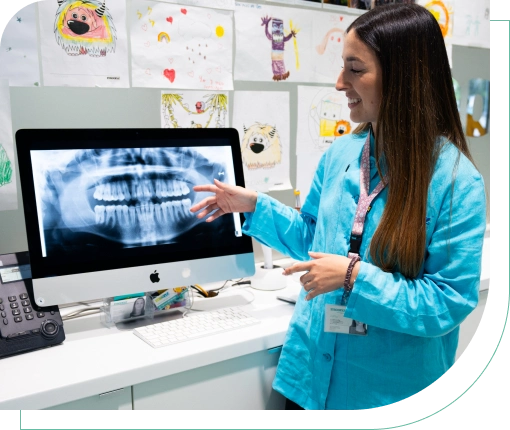
The way a child breathes, as well as certain habits, can directly influence the development of their mouth and face. When a child regularly breathes through their mouth instead of their nose, the tongue does not rest against the palate as it should. This can contribute to a narrow palate, crowded teeth and an altered bite.
Something similar can happen with habits such as thumb sucking, prolonged pacifier use or atypical swallowing (swallowing while pushing the tongue against the teeth). When these habits persist over time, they can affect the position of the teeth and the growth of the jaws. Identifying them early makes it possible to correct them before they cause lasting changes.
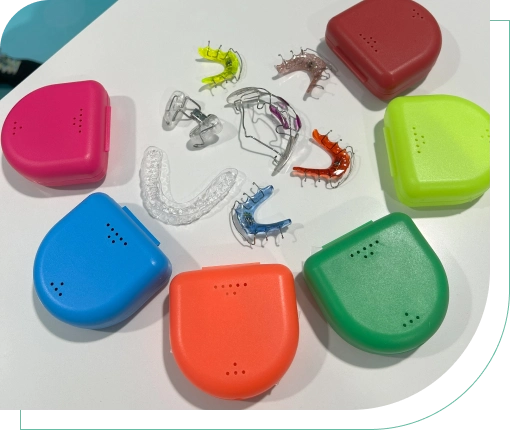
Beyond achieving a straighter smile, early treatment can provide important benefits for a child’s health and well-being:
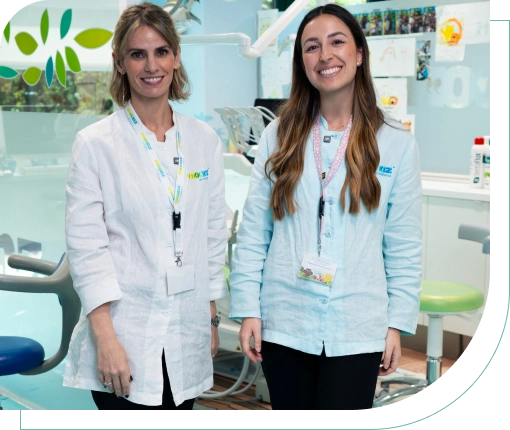
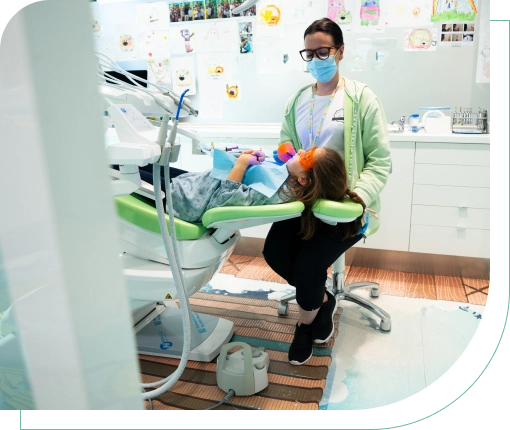
The first visit is straightforward and, above all, gives us the opportunity to understand your child’s individual needs. The orthodontist examines your child’s mouth and, if necessary, takes X-rays or other diagnostic records to assess their teeth and jawbones. They will then explain whether it is best to wait and monitor your child’s development or to begin treatment.
To help your child feel relaxed, it can be useful to explain that the dentist is simply going to look at their mouth. At Moonz dental clinics, we are experienced in treating children, and we take care to make every visit a positive experience, helping them feel comfortable from day one and reducing the likelihood of developing a fear of the dentist.
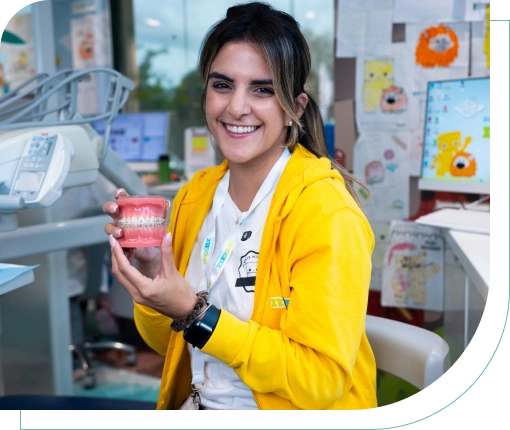
The cost of children’s orthodontic treatment depends on each individual case, so an exact price can only be provided after an assessment. The main factors include the type of treatment and appliance required, the length of treatment and the complexity of the problem that needs to be corrected.
At Moonz clinics, your child’s first assessment is free. Once we have made a diagnosis, we will provide you with a clear quote tailored to your child’s needs. We also offer financing options to make the cost of treatment easier to manage.
It depends on the type of treatment and the individual case. In general, it can range from around six months to about two years: interceptive treatments tend to be shorter, while corrective treatments with braces or aligners usually take a little longer.
Braces are usually fitted at around 11 or 12 years of age, once the permanent teeth have erupted and the jawbones are more developed.
Your child may experience some mild discomfort during the first few days after an orthodontic appliance is fitted or adjusted, but this usually subsides quickly. Modern orthodontic appliances are designed to keep children as comfortable as possible throughout treatment.
Yes. Once orthodontic treatment is complete, retainers are used to keep the teeth in their new position, as teeth naturally tend to move over time and may shift back towards their original position. Retainers can be fixed (a metal wire bonded to the back of the teeth) or removable (custom-made clear retainers).
Some mild malocclusions may not worsen, but others can become more difficult to correct as the child grows, eventually requiring longer treatment or, in cases involving more severe jawbone problems, surgery in adulthood. This is why an early orthodontic assessment is recommended in all cases, so the best course of action can be determined.
If you think your child might need orthodontic treatment, it’s best to seek advice as soon as possible. At Moonz, we have a large team of paediatric dentists and orthodontists who are used to treating children of all ages, and we offer a free first visit so you can get to know us and have all your questions answered before making any decision.
Doctor Rodrigo Villaverde has a Degree in Dentistry from Universidad de Salamanca and is specialised in Orthodontics and Dentofacial Orthopaedics by Hospital Universitario Fundación Jiménez Díaz. He is certified in the main clear orthodontic systems such as Invisalign and Spark. Also, he is a member of the Spanish Orthodontic Society (SEDO).